From August 18th 2026, GtoPdb will require users to register to use the website. Please see our blog post for more information.

|
Compound class:
Synthetic organic
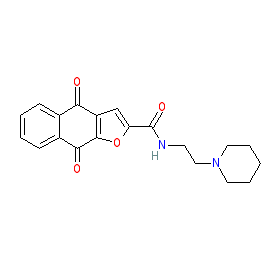
Comment: Compound 8q is reported as an orally active inhibitor of the transcription factor STAT3 [4]. Structurally 8q is a derivative of napabucasin (BBI608), a cancer cell stemness inhibitor that targets the STAT3 pathway [1], and which was evaluated for antineoplastic potential in clinical trial [2]. STAT3 is a crucial component of the JAK/STAT signalling pathway, that is implicated in cancer and inflammation. STAT3 is frequently activated in cancers, where it downmodulates intrinsic immune surveillance of tumour cells. Phosphorylated (activated) STAT3 (pSTAT3) is a marker of poor cancer prognosis [5-6]. Inhibition of the STA3 pathway induces T cell- and NK cell-dependent growth inhibition of tumours and by this mechanism, enhances antitumour immunity [3]. Selective STAT3 inhibitors are being investigated as anti-cancer immunotherapeutics and as more general immunomodulators for non-cancer inflammatory disorders.

Ligand Activity Visualisation ChartsThese are box plot that provide a unique visualisation, summarising all the activity data for a ligand taken from ChEMBL and GtoPdb across multiple targets and species. Click on a plot to see the median, interquartile range, low and high data points. A value of zero indicates that no data are available. A separate chart is created for each target, and where possible the algorithm tries to merge ChEMBL and GtoPdb targets by matching them on name and UniProt accession, for each available species. However, please note that inconsistency in naming of targets may lead to data for the same target being reported across multiple charts. ✖ |
|
|||||||||||||||||||||||||||||||||||
| References |
|
1. Hubbard JM, Grothey A. (2017)
Napabucasin: An Update on the First-in-Class Cancer Stemness Inhibitor. Drugs, 77 (10): 1091-1103. [PMID:28573435] |
|
2. Jonker DJ, Nott L, Yoshino T, Gill S, Shapiro J, Ohtsu A, Zalcberg J, Vickers MM, Wei AC, Gao Y et al.. (2018)
Napabucasin versus placebo in refractory advanced colorectal cancer: a randomised phase 3 trial. Lancet Gastroenterol Hepatol, 3 (4): 263-270. [PMID:29397354] |
|
3. Kortylewski M, Kujawski M, Wang T, Wei S, Zhang S, Pilon-Thomas S, Niu G, Kay H, Mulé J, Kerr WG et al.. (2005)
Inhibiting Stat3 signaling in the hematopoietic system elicits multicomponent antitumor immunity. Nat Med, 11 (12): 1314-21. [PMID:16288283] |
|
4. Li C, Chen C, An Q, Yang T, Sang Z, Yang Y, Ju Y, Tong A, Luo Y. (2019)
A novel series of napabucasin derivatives as orally active inhibitors of signal transducer and activator of transcription 3 (STAT3). Eur J Med Chem, 162: 543-554. DOI: 10.1016/j.ejmech.2018.10.067 [PMID:30472602] |
|
5. Yu H, Lee H, Herrmann A, Buettner R, Jove R. (2014)
Revisiting STAT3 signalling in cancer: new and unexpected biological functions. Nat Rev Cancer, 14 (11): 736-46. [PMID:25342631] |
|
6. Yuan J, Zhang F, Niu R. (2015)
Multiple regulation pathways and pivotal biological functions of STAT3 in cancer. Sci Rep, 5: 17663. [PMID:26631279] |