GtoPdb is requesting financial support from commercial users. Please see our sustainability page for more information.

|
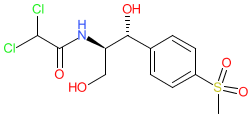
Synonyms: dextrosulphenidol | thiophenicol


thiamphenicol is an approved drug
Compound class:
Synthetic organic
Comment: Thiamphenicol is a semisynthetic, broad-spectrum antibacterial derived from chloramphenicol.
|
|
|||||||||||||||||||||||||||||||||||
| No information available. |
Summary of Clinical Use  |
| Thiamphenicol is indicated as a treatment for a wide range of bacterial infections, including those of the gastrointestinal, urinary, and respiratory tracts. It has not been associated with aplastic anemia and is therefore considered a safer alternative to chloramphenicol. Thiamphenicol is not FDA approved. In Europe it is not approved at the EMA level, but is/has been approved in a number of national jurisdictions including the Italy, France, Belgium, and Luxembourg. |
| Mechanism Of Action and Pharmacodynamic Effects |
| The amphenicol class of antibacterial compounds prevent protein chain elongation by binding to the 23S rRNA component of the bacterial 50S ribosomal subunit and inhibiting the peptidyl transferase activity of the bacterial ribosome. |